
Muni Jataka
Muni Jataka
In the verdant forests of the Himalayas, where ancient trees whispered secrets to the wind and snow-capped peaks pierced the azure sky, there lived a Bodhisattva in the form of a wise and ascetic sage. He had renounced the world, leaving behind all worldly possessions and attachments, seeking only the path to enlightenment. His home was a simple hermitage, a humble dwelling woven from leaves and branches, nestled beside a crystal-clear stream. His days were spent in deep meditation, his nights in silent contemplation, his mind a tranquil lake reflecting the vastness of the cosmos.
One day, a fierce storm descended upon the forest. The wind howled like a tormented spirit, tearing at the trees, and torrential rain lashed down, turning the gentle stream into a raging torrent. The Bodhisattva, undisturbed by the tempest, continued his meditation, his inner peace a sanctuary against the external chaos. However, the storm's fury threatened to destroy his humble abode and wash away the offerings left by devoted villagers – fruits, roots, and grains, placed there as tokens of their respect and gratitude.
As the storm raged, a young Brahmin, a student of the Bodhisattva, sought refuge in the hermitage. He was a man of good heart but possessed a restless spirit and a mind easily swayed by doubt. He watched the storm with growing anxiety, concerned not for his own safety, but for the potential damage to their sacred dwelling and the loss of the offerings. He saw the Bodhisattva sitting serenely and felt a pang of frustration. "Master!" he cried, his voice barely audible above the din of the storm, "How can you sit so calmly when our hermitage is in danger? The offerings will be swept away, and our sanctuary destroyed!"
The Bodhisattva opened his eyes, his gaze calm and compassionate. He looked at his anxious student and said gently, "My son, do not be troubled. The storm is but a temporary disturbance. True peace lies not in the external shelter, but within the mind. Attachment to worldly things, even a humble hermitage, leads to suffering. The offerings are merely material. Their true value lies in the intention with which they are given, not in their physical form."
The Brahmin student, however, could not grasp this profound wisdom. He continued to fret, his mind racing with worries about the physical world. He believed that the Bodhisattva's equanimity stemmed from a lack of concern or a detachment that was almost unnatural. He thought, "If he were truly wise, he would also protect what is given to him and maintain his dwelling."
The storm eventually subsided, leaving behind a trail of fallen trees and debris. The hermitage, though battered, remained standing, and the offerings, though scattered, were largely intact. The Bodhisattva, with his student, began the task of tidying up. As they worked, the Bodhisattva explained the nature of impermanence, how all compounded things are subject to change and decay. He emphasized that true wisdom lies in understanding this truth and cultivating inner stillness, regardless of external circumstances.
Days turned into weeks, and the Bodhisattva continued his teachings. He explained that the mind, when free from attachment and aversion, becomes a powerful fortress, impervious to the storms of life. He taught the student to observe his thoughts and emotions without judgment, to understand their transient nature, and to find peace in the present moment. He expounded on the virtues of patience, equanimity, and non-reactivity.
The Brahmin student, through diligent practice and the Bodhisattva's patient guidance, gradually began to understand. He saw how his own anxieties were rooted in attachment to the impermanent. He realized that true strength and peace came from within, from a mind that was stable and unshakeable, like the steadfast mountains in the distance. He learned that the greatest offering one can make is not of material possessions, but of one's own mind, surrendered to the pursuit of truth and wisdom.
The Bodhisattva, by living and teaching these principles, exemplified the highest form of renunciation and wisdom. He showed that true asceticism is not about outward austerity alone, but about inner discipline and the profound understanding of the nature of reality. His teachings transformed the Brahmin student, who went on to become a wise and compassionate teacher himself, spreading the message of inner peace and equanimity throughout the land.
— In-Article Ad —
💡Moral of the Story
True peace and strength are found not in external conditions or material possessions, but in the stillness and equanimity of the mind, cultivated through wisdom and detachment.
Perfection: Wisdom (Prajna) and Patience (Khanti)
— Ad Space (728x90) —
More Jataka Tales You May Enjoy
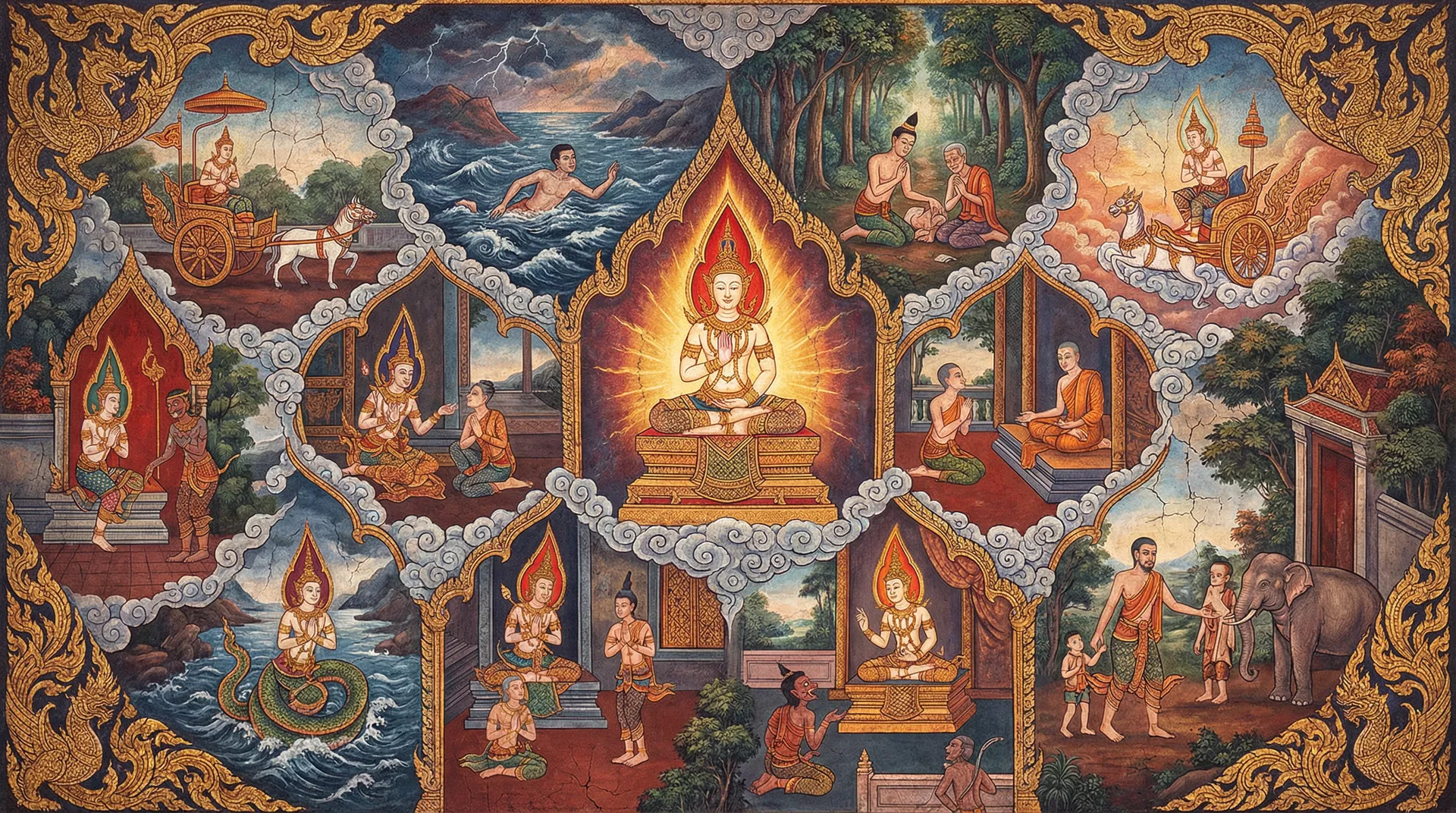 542Mahānipāta
Sasa Jātaka
The Hare Who Sacrificed HimselfIn a time long past, when the forests teemed with life and the stars ...
💡 Selfless compassion and the willingness to sacrifice for the well-being of others are the highest virtues.
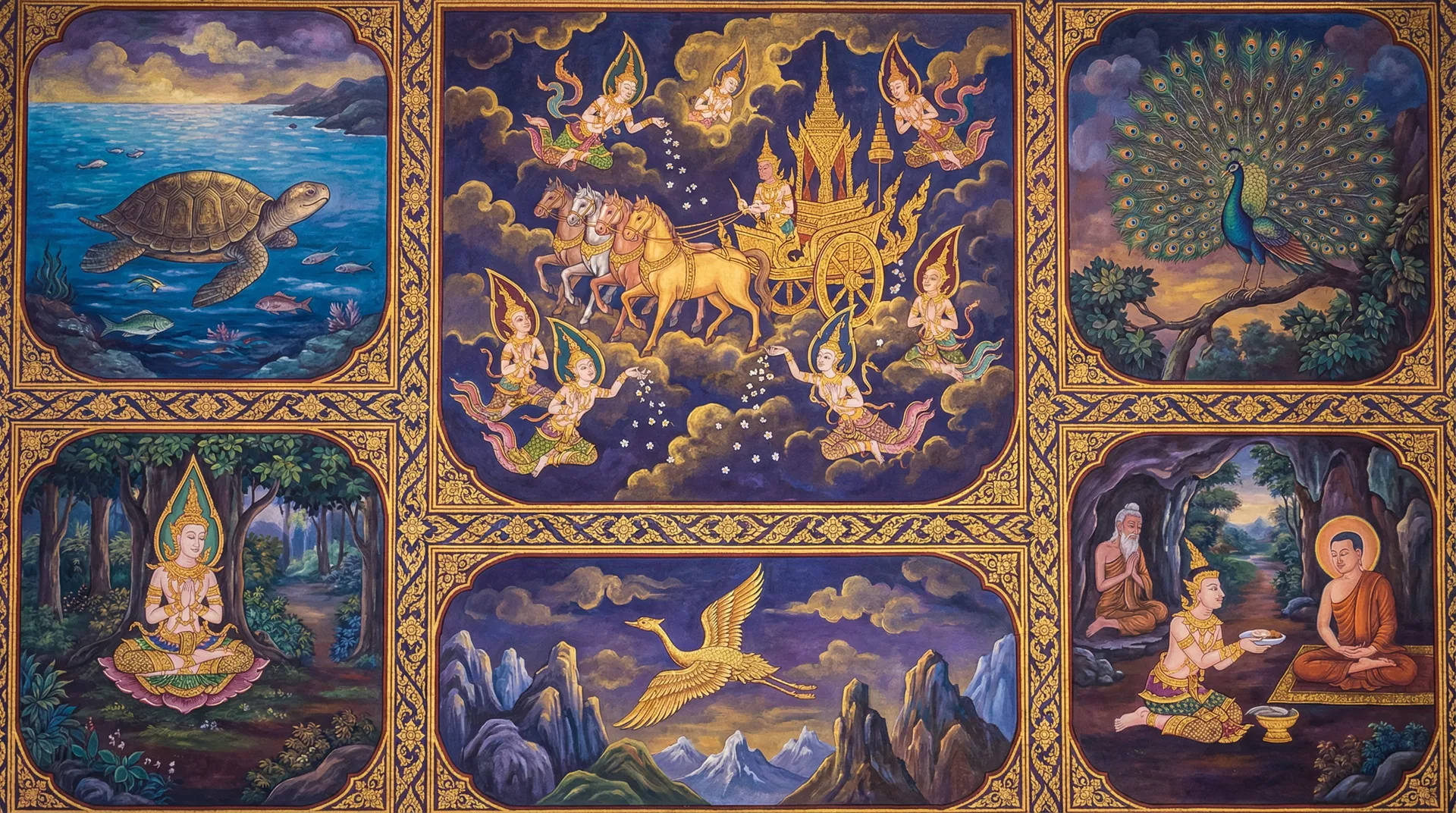 415Sattakanipāta
Mulaka-Jataka
Mulaka-JatakaIn the vibrant city of Savatthi, where merchants thrived and scholars debated, lived a ...
💡 Integrity and compassion are the most valuable treasures one can possess. True wealth lies in serving others, and perseverance in virtue will ultimately lead to justice and reward.
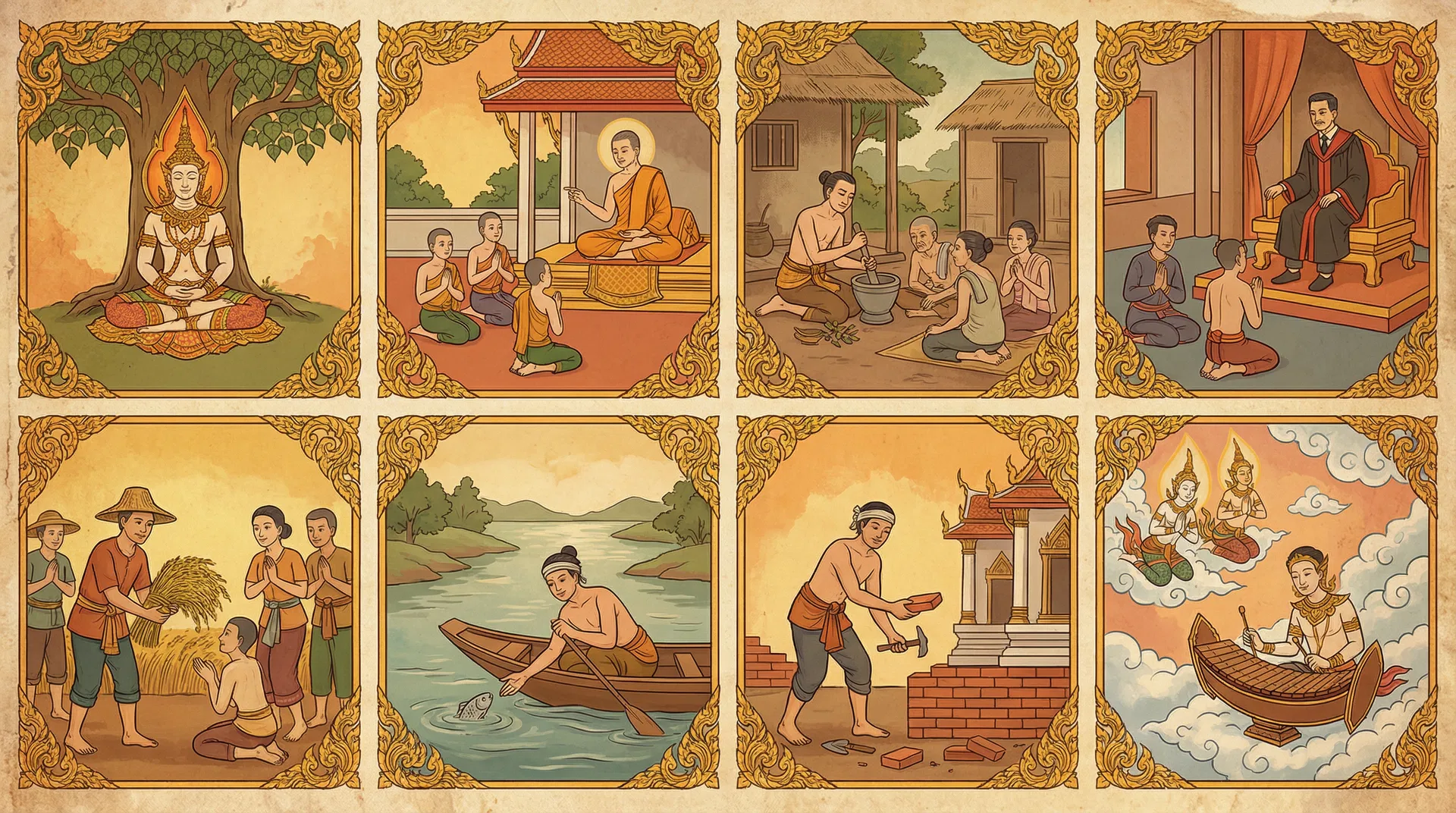 422Aṭṭhakanipāta
Sammodamāna Jātaka
Sammodamāna JātakaIn the ancient city of Varanasi, nestled beside the sacred Ganges River, lived a w...
💡 Unity, open communication, and mutual respect are the cornerstones of lasting success and true prosperity. Harmony achieved through collaboration is far more powerful than individual cunning or division.
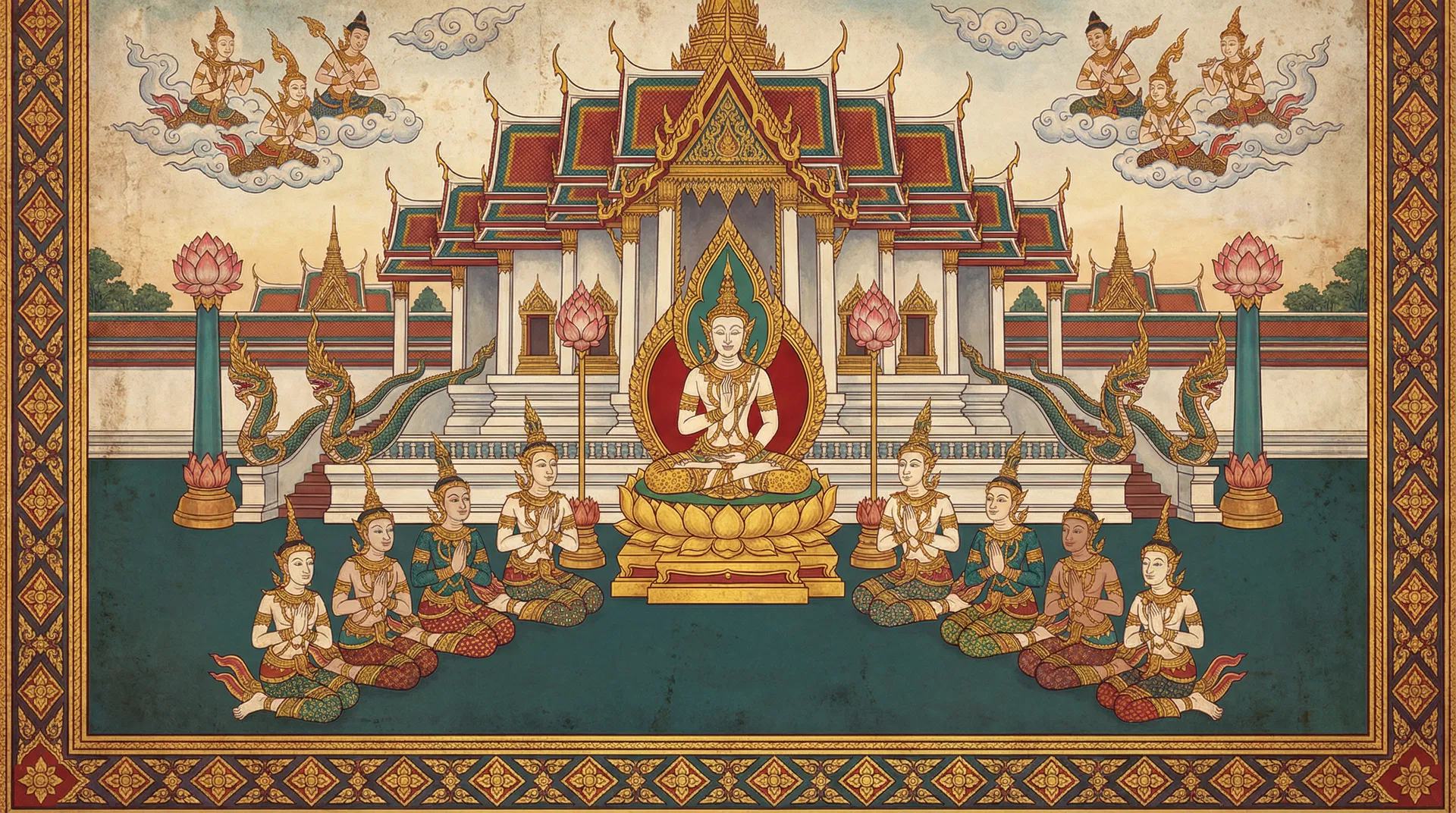 427Navakanipāta
Sakuna Jataka
The Tale of the Virtuous Bird In the heart of a dense forest, where ancient trees reached for the sk...
💡 Compassion, selflessness, and the accumulation of spiritual merit have the power to overcome great adversity and benefit all beings. In times of crisis, unity and shared good deeds are far more powerful than anger and division.
 291Tikanipāta
Mūkapacca Jātaka
The Tale of the Mute PaccekabuddhaIn the realm of Mithila, where prosperity bloomed and wisdom was c...
💡 True wisdom and wealth are found not in external possessions, but in detachment and the cultivation of inner peace. Silence can be a powerful teacher, urging us to listen with our hearts.
 346Catukkanipāta
Mahā-Ummagga Jātaka
The Great Wisdom Bore JātakaIn the ancient kingdom of Mithila, nestled beside the mighty Ganges, the...
💡 True wisdom lies not in brute strength, but in profound understanding, patience, and the strategic application of knowledge to overcome even the most formidable challenges.
— Multiplex Ad —